Quick answer: Keep the lid on to block light and debris, fit a diverter with a filter and clear your gutters every autumn. Use the water regularly and clean the butt once a year. The RHS recommends warm water and a little washing-up liquid. If it already smells, empty it, scoop out the sludge, scrub and rinse it, then refill. A water butt treatment can help keep it fresh between cleans.
Stored rainwater is brilliant for the garden, but left to its own devices a water butt can turn green, start to smell like rotten eggs or fill up with mosquito larvae. The good news is that it’s easy to prevent and easy to fix.
This guide explains why water butt water goes off, how to clean a butt properly, and the everyday habits that keep it fresh.
Why does water butt water go green or smelly?
Four things are usually to blame:
1. Light
Light is what algae need to grow. A butt with a missing or poorly fitting lid, or one made from thin, translucent plastic, lets in enough light for algae to turn the water green.
2. Debris from the roof
Leaves, moss, bird droppings, pollen and grit all wash off the roof and down the pipe. This organic matter settles at the bottom of the butt and slowly rots.
3. Lack of oxygen
As that debris breaks down in still water, oxygen gets used up. Bacteria that thrive without oxygen take over, and they produce the bad, eggy smell.
4. Warmth
Warm water speeds everything up. A butt in full sun in July goes off much faster than one in the shade.
How to stop a water butt smelling: prevention
Keep the lid on
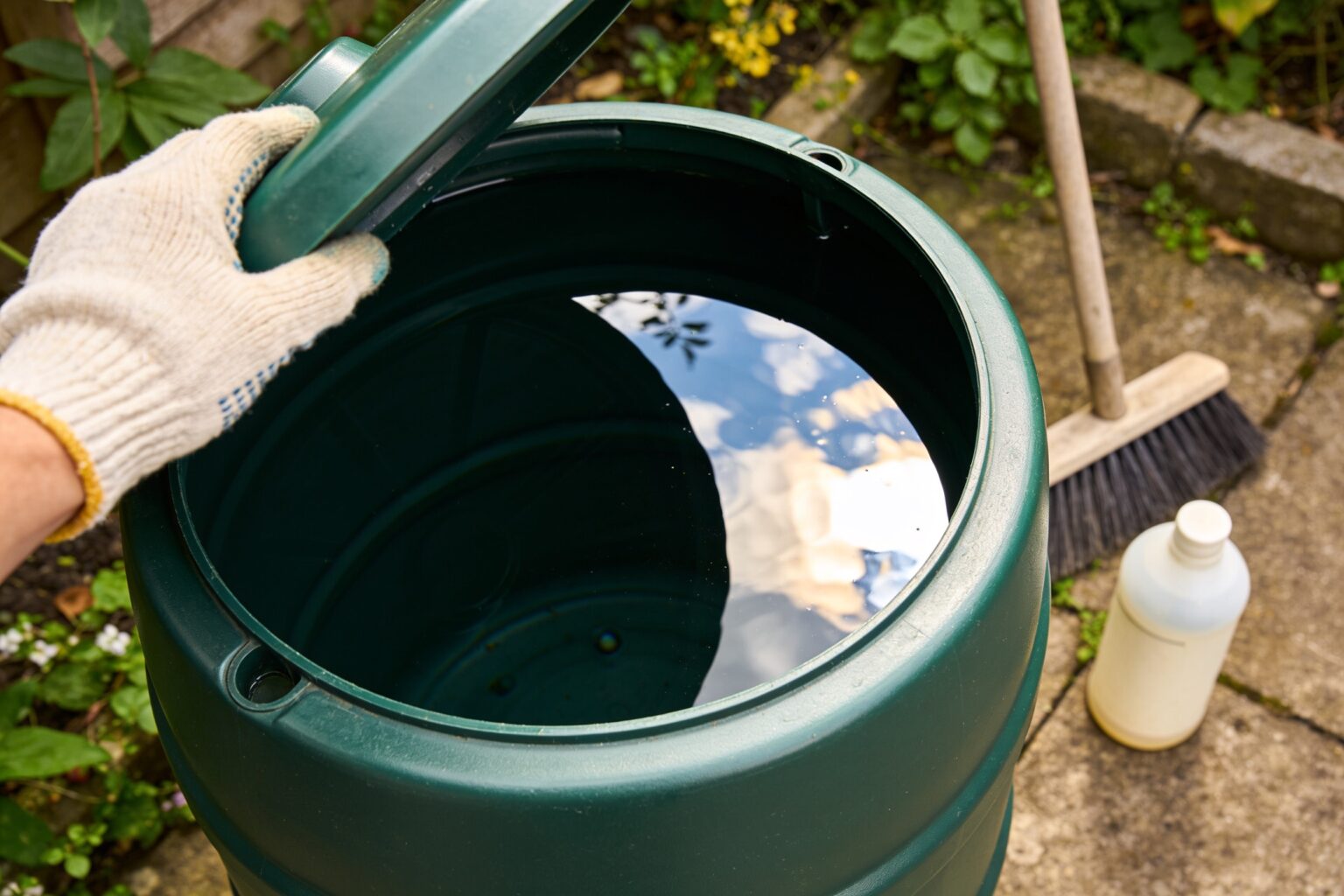
A tight-fitting lid is the single most important thing. It keeps out light, leaves, insects and small animals. The RHS also recommends a close-fitting lid to stop rain-borne spores of plant diseases getting in.
If your lid is cracked or missing, replace it. A child-safe or locking lid is a good idea anyway if children use the garden. For open barrels, a fitted mesh cover is the next best thing. You’ll find both in our lids and covers section.
Filter what goes in
Most of the muck in a water butt arrives from the gutter. Two simple fixes:
- Clear your gutters in late autumn once the leaves have fallen, and again in spring if needed.
- Use a diverter with a filter, or a gutter guard, to catch leaves and moss before they reach the butt. See how diverters work.
Keep it cool and shaded
Put your butt on the shadier side of the house if you can, or screen it with plants or a trellis. Darker, opaque butts let in less light than pale or thin ones.
Use the water regularly
Water that sits for months is more likely to go stale. Using it regularly keeps it moving and makes room for fresh rain. The RHS recommends using stored water often to keep it fresh.
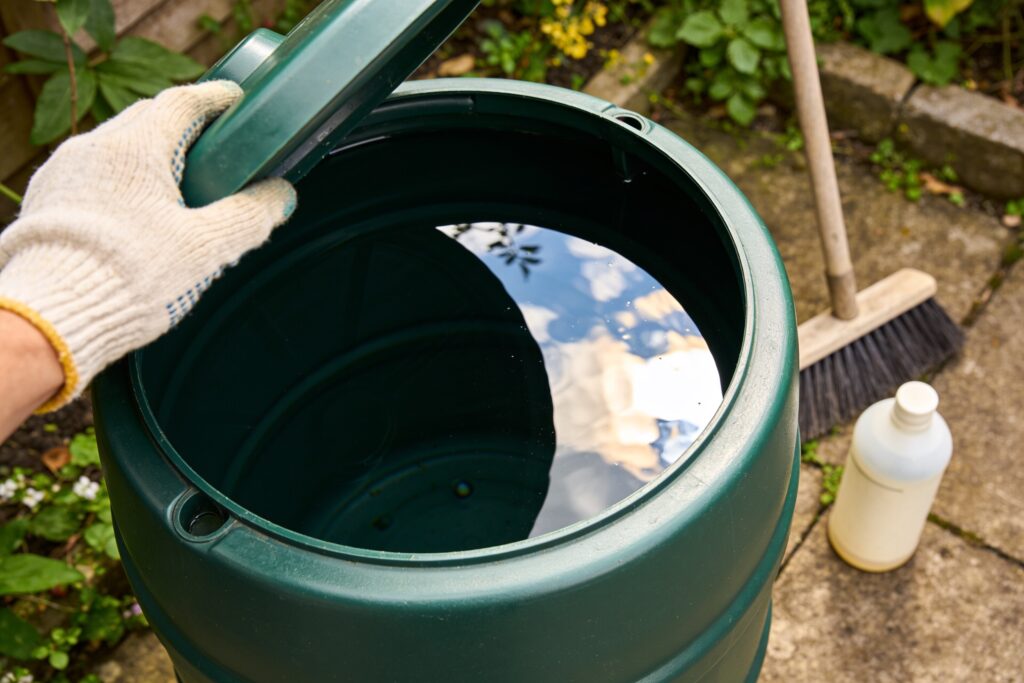
How to clean a water butt: step by step
Clean your water butt once a year. Late winter is ideal, before the growing season starts and while the butt is likely to refill quickly. Clean it any time it smells.
What you’ll need
- A stiff brush or a long-handled scrubbing brush
- Warm water and a little washing-up liquid
- A bucket or old saucepan for scooping
- Rubber gloves
- A hose for rinsing
Step 1: Empty the butt
Drain the water through the tap and use it on established borders, not on seedlings. If the tap is near the bottom, you’ll get most of it out. Tip the butt to empty the rest.
Step 2: Scoop out the sludge
There’s usually a layer of dark sludge at the bottom. Scoop it out and put it on the compost heap or spread it thinly on a border.
Step 3: Scrub the inside
Scrub the inside walls and base with warm water and a little washing-up liquid, as the RHS recommends. Pay attention to the bottom and the area around the tap.
Step 4: Rinse thoroughly
Rinse well with a hose until no soap remains, then drain it.
Step 5: Check the parts
While the butt is empty, check the tap for drips, the seals for cracks and the diverter filter for blockages. It’s the perfect time to fit a new tap if needed.
Step 6: Reconnect and refill
Refit the lid, reconnect the diverter and let the rain do the rest.
Avoid harsh chemicals. Bleach and strong disinfectants can harm plants and wildlife if residue gets into the water. If you use any cleaning product beyond washing-up liquid, choose one made for water butts and rinse very thoroughly.
Water butt treatments: do they work?
Water butt cleaners and treatments are designed to keep stored rainwater fresher between cleans and reduce smells, scum and algae. Many use natural ingredients or beneficial bacteria, and some are described as wildlife-friendly.
They’re no substitute for a lid and an annual clean, but they can help, especially in hot summers or where trees drop a lot of debris. Choose one made specifically for water butts and follow the dosing on the label, particularly if you’re watering edible crops.
-

Garden Genie Water Butt Cleaner 500ml – Effective Algae & Odour Remover for Hygienic Stored Water – Clear Contaminants & Smells with Powerful Treatment
Original price was: £6.99.£6.00Current price is: £6.00. -
Natural Water Butt Treatment Cleaner Wildlife Friendly
£13.95 -
Harcostar Child Safety Lid For Water Containers
£18.95


Browse more in water butt cleaners.
What about barley straw?
A small net bag of barley straw in the water is a traditional pond trick for controlling algae, and some gardeners use it in water butts too. It works slowly as the straw breaks down, and you’ll need to replace it every few months.
Mosquito larvae in your water butt?
If you see tiny wriggling larvae in the water, mosquitoes or midges have been laying eggs on the surface. That means the lid isn’t sealing properly. Fit a tighter lid or a fine mesh cover and they’ll soon stop. A properly sealed butt shouldn’t get them at all.
Is water butt water safe for plants?
For established plants in borders, pots and veg beds, rainwater is ideal. Many plants prefer it to hard tap water.
The exception is seedlings. The RHS advises against using stored rainwater on seedlings, because it may contain the diseases that cause damping off, where young seedlings collapse at the base. Use mains water for seedlings and young plants, and save the water butt for everything else.
Is it safe to use smelly water?
Smelly water isn’t ideal. The bad smell comes from bacteria that thrive without oxygen. It’s best to empty and clean the butt, using the old water on established ornamental borders rather than edible crops or pots.
Never drink water from a water butt. It isn’t treated, and it’s for the garden only.
Seasonal water butt care checklist
| When | What to do |
|---|---|
| Late winter | Empty, clean and check the tap and seals |
| Spring | Check the diverter filter and clear gutters if needed |
| Summer | Use the water often and keep the lid firmly on |
| Autumn | Clear fallen leaves from gutters and filters |
| Hard frost | Consider draining part of the butt to protect it |
Clean water butt FAQs
How often should I clean my water butt?
Once a year, plus any time it smells. Late winter is a good time.
What can I put in my water butt to keep it clean?
A product made specifically for water butts, used as directed. The best protection, though, is a tight lid, a filtered diverter and an annual clean.
Why does my water butt smell of rotten eggs?
Organic debris has rotted at the bottom in still, oxygen-poor water, and bacteria are producing sulphur smells. Empty it, clean it and fit a filter to stop leaves getting in.
Can I use bleach to clean a water butt?
It’s best avoided. Bleach residue can harm plants and wildlife. Warm water, a little washing-up liquid and a stiff brush do the job.
Does green water harm plants?
Algae itself isn’t usually harmful to established plants, but green water is a sign the butt is letting in light. Fix the lid and give the butt a clean.
Starting from scratch? See what a water butt is and how to fit one.